Services / direct with Hamza
AI document workflow: extraction with validation and human review
I help teams test whether one repetitive document type, such as supplier invoices, delivery notes or application forms, can become reliable structured data. The pilot covers intake, AI extraction into an agreed schema, rule-based checks on required values, totals and dates, a review queue for anything doubtful, duplicate detection and export to one system you already use.
The problem
A model can return perfectly formatted fields that are still wrong: a misread total, a swapped date, a supplier name taken from the wrong line. Matching a schema is not the same as being correct. So the pilot starts with a feasibility check on a sample of your real documents, sets validation rules your team agrees with and keeps a person in charge of doubtful records. Nothing is paid, approved or filed automatically.
01 / What this includes
What this includes
- 01
Feasibility check on a sample of one document family
- 02
Agreed extraction schema: the fields, formats and which ones are required
- 03
Deterministic validation of required values, totals, dates and duplicates
02 / How we work
How we work
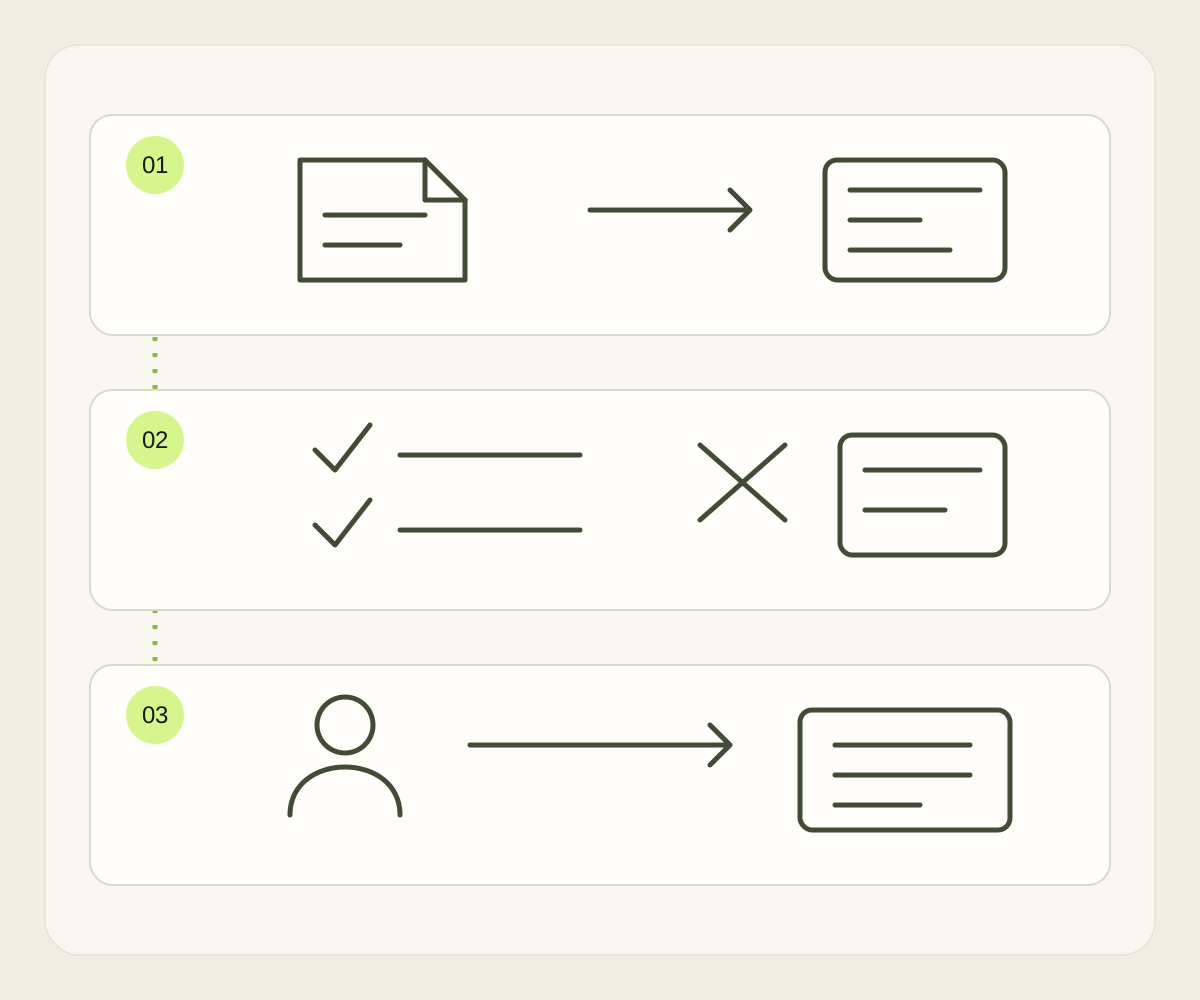
- 01
Analyse a sample and agree the schema
- 02
Build extraction, validation and the review queue
- 03
Measure corrections and decide whether to expand
03 / A useful first scope
A useful first scope
Start with one document family, an agreed schema, written validation rules, one intake channel, one reviewer and export to one system.
04 / What shapes the quote
What shapes the quote
The quote depends on document variety, the number of fields and rules, scan quality, volume, the export system and data-retention requirements.
MCP or a direct API? Read the comparison guide.
06 / FAQ
Questions before you start
Will the AI extract every field correctly?
Not every time. Even when the output matches the schema, a value can be misread. That is why rules check required fields, totals and dates, and a person confirms or corrects flagged documents before export.
Which documents are a good fit for a pilot?
One document family with the same purpose, enough real examples, stable fields and a person who knows what correct looks like. Very mixed or handwritten documents are tested on a small sample first.
What is checked automatically?
Rules we write together: required fields present, line items matching the total, plausible dates, identifier formats and documents already processed. Anything that fails a rule goes to the review queue.
Does the workflow pay or file anything for us?
No. The pilot produces reviewed records and exports them to the agreed tool. Payments, approvals and regulatory obligations stay with you and your advisers; the service makes no compliance promise.
Where do the documents and extracted data go?
To agreed storage, with limited access and a defined retention period. We review the model provider’s data settings, and highly sensitive documents can stay out of the pilot.
Do you have a case study for this service?
Not yet: no client case study for this service is published. The diagram on this page is a synthetic illustration. The pilot exists to measure, on your own documents, how many records need correction.
Discuss your project
Tell me what you need. I'll suggest a useful first step.
Send a few lines about your goal, current tools, and timeline.
Project brief
Send a short project brief
Tell me what you need in a few lines. I'll reply with a useful next step.